
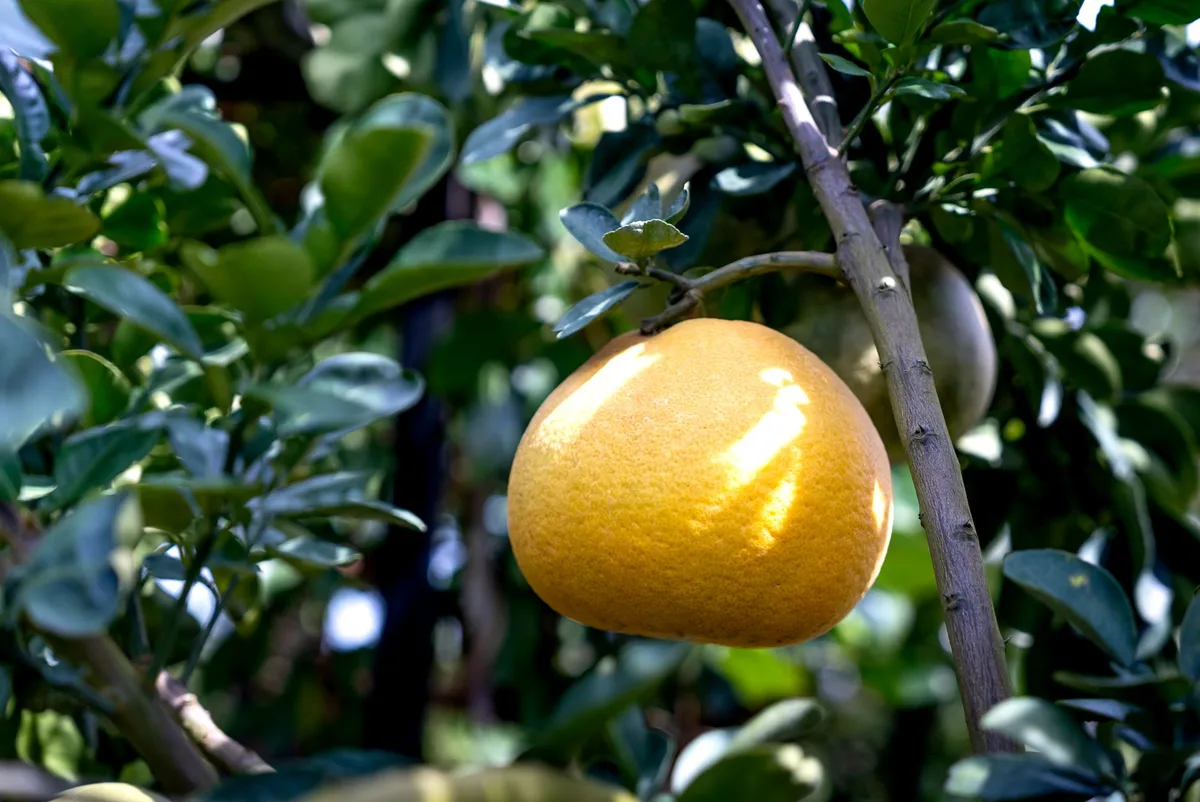
It's the middle of winter, the nights are cold, and your grapefruit is the one tree in the yard that looks worse than it did in September. The leaves have gone dull and patchy, a few are dropping, and when you turn one over there's fine webbing on the underside with specks moving in it.
Most people out here assume mites are a hot weather problem. On grapefruit and lemons in this valley, one of them isn't.
A winter mite, and UC says so plainly
The Yuma spider mite is what UC calls a sporadic pest of citrus in the inland valleys of California. The line that matters for us is the regional one. In the Coachella and Imperial valleys it occurs on grapefruit and lemons and is most numerous in winter and late spring.
Read that against the usual advice and you can see where people go wrong. Everything written about spider mites tells you to look in summer, when it's hot and dusty and the tree is stressed. That's the right advice for most mites and the wrong month for this one. The commercial calendar for this valley even runs sulfur from October through the middle of March, which tells you where UC thinks the pressure actually is.
So a grapefruit in Coachella or Indio that looks tired in January is not automatically a cold injury or a watering mistake. Turn a leaf over first.
How to know it's this one
There are several mites on citrus here and they aren't the same problem, so the identification is worth two minutes.
Yuma spider mite is shaped like citrus red mite but UC describes it as light straw to dark pink colored and much shinier in appearance. Citrus red mite is red and doesn't shine like that. The clearest sign isn't the mite at all, it's what it leaves behind. The females lay spherical, peach-colored eggs within substantial amounts of webbing on the underside of leaves and sometimes on the fruit.
Peach-colored round eggs sitting in real webbing on the leaf undersides is a specific picture. Dust and spider silk from actual spiders look nothing like it under a hand lens, and a phone camera on macro will show it well enough in good light.
What the damage actually costs you
This is the part that changes what you do next, and it's good news.
Feeding causes discoloration and in severe cases defoliation. On green fruit it produces a stippled and bleached appearance, which looks alarming on a grapefruit you were planning to eat. But UC's own wording on that is worth holding onto, because in all but severe cases the fruit colors up normally. The blotchy look you're seeing in December is usually gone by the time the fruit is ready.
And on the question everybody asks first, UC is direct. Generally, damage from Yuma spider mites is not severe enough to warrant a pesticide application. The threshold for doing anything at all in our valleys is leaf drop, not appearance.
That means a backyard grapefruit with mottled leaves, webbing underneath and fruit that's going to color up anyway is a tree you watch, not a tree you treat.
The two things that do move the needle here
UC's cultural advice for this mite is short, and both halves of it are about conditions in the valley rather than the insect.
Adequate irrigation is the first. A citrus tree running dry builds mite populations faster, and in this climate a tree can be dry while the surface looks damp. The trap is the opposite mistake, because watering harder is also how people drown citrus, and a saturated root zone brings its own problem. We went through that in the difference between a thirsty tree and a drowning one, and the test there works the same on citrus.
Dust control is the second, and it's underrated out here. Mites do better on dusty foliage. A citrus tree on a dirt driveway, along an unpaved shoulder or downwind of a graded lot carries a film on every leaf, and that's a different tree from the one in the middle of an irrigated yard. Around Thermal and the worked ground south of Mecca this is most of the story, and in Cathedral City the wind-driven sand does the same job. Rinsing the canopy with plain water on a mild morning is not a treatment, but it isn't nothing either.
There's also a predator already working. Sixspotted thrips is an effective predator of Yuma spider mite, and UC lists several others alongside it. They're small and you won't notice them, which is exactly why a cover spray aimed at the mite usually trades a cosmetic problem for a worse one next season.
What it isn't
Three other things turn up on citrus here and get confused with this.
Silver scribbles winding across new leaves are citrus leafminer, which is a different insect and on an established tree needs no response at all. Tiny things sitting at a 45-degree angle with their back ends in the air are Asian citrus psyllid, which matters for a reason that has nothing to do with the leaf it's on. And yellow leaves with no webbing, no insects and an even pattern on both sides of the midrib are usually our alkaline soil locking up iron, which is the most common citrus complaint in the valley and isn't a pest at all.
What we do on a citrus call in winter
We turn leaves over before anything else, because the cheapest answer is the one you can see with a lens. Then we read the pattern. Which leaves are affected and where they sit on the tree, whether the damage is even or one-sided, how the fruit is coloring, and what the ground and the irrigation are doing underneath. Working a diagnosis means finding the first cause rather than the loudest symptom, and on citrus here the first cause is more often soil or water than anything with legs.
We'll also tell you when the answer is to leave it alone. A grapefruit in La Quinta carrying some mite stippling in January, with a full canopy and fruit that's sizing up, is a tree having an ordinary winter.
When to call
Call at a normal pace if you're finding webbing and fine specks under citrus leaves, if the foliage has gone dull and blotchy over a few weeks, or if green fruit is looking bleached and you want to know whether it will still color.
Call sooner if leaves are actually dropping, if a young tree planted in the last year or two is thinning out, or if several citrus in a row are going the same way at the same time.
We're on Highway 111 in La Quinta and we cover the valley from Palm Springs and Cathedral City through Indio and Coachella. If you want somebody to look under those leaves and tell you whether it's worth doing anything, that's a straightforward tree doctor visit from the Coachella Valley office.