
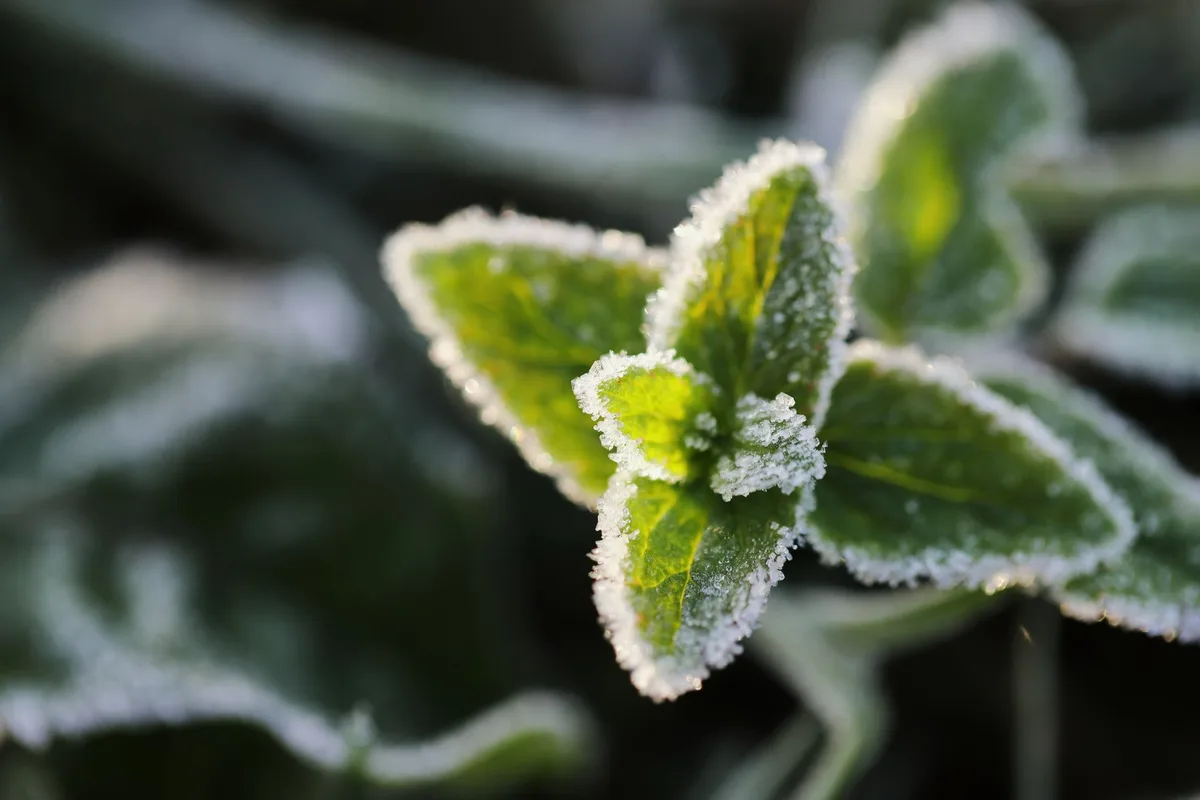
A cold night comes through, and a few days later the lemon looks terrible. Leaves have gone limp and brown and the tips of the branches are crisp. Every instinct says to get the dead stuff off the tree and tidy it up.
That instinct is the single most expensive mistake people make with citrus out here, and it's worth knowing why before the first real cold snap.
Why a freeze happens in a place this hot
People are surprised we get frost at all. The mechanism is the same thing that makes the climate pleasant, which is dry air.
UC's own description of citrus growing in this region notes that the desert valleys produce fruit under wide day-night temperature swings and low humidity. Dry, clear air holds very little heat after sundown, so the ground radiates warmth straight up into the sky and the air just above it keeps dropping. A December afternoon in the seventies and a night that touches freezing is an ordinary pairing here, not a freak event.
Cold air also runs downhill and pools. Two citrus trees in the same yard in Indio can come through the same night differently if one sits in a low corner against a wall and the other is out in the open.
The mistake, and what UC actually says
Here's the rule, and it goes against everything your eyes are telling you.
UC's guidance is to leave the dead branches and leaves on the tree until late spring or summer, and to prune dead material out only after new growth develops. The wording from UC Cooperative Extension is blunter still, that no attempt should be made to prune or even assess the damage until spring when new growth appears.
Two reasons sit behind that, and the second one is the one that costs money.
The first is that you cannot see the full injury yet. The true extent of damage to larger branches, trunks and rootstocks may not appear for one to four months following the freeze. A limb that looks fine in December can be dead in February, and a limb that looks dead in December is often carrying live wood further in.
The second is that cutting early takes healthy tissue with it. Pruning too soon removes live branches and increases the risk of more damage, partly because every cut opens the tree and partly because the brown canopy you want to remove is shading and insulating the wood underneath it through the rest of the winter. The ugly tree is protecting itself.
So the correct response in December is to do nothing to the tree. Write the date on a calendar and look again when it pushes new growth.
Which trees are actually at risk
Not every citrus in the valley is in the same position.
Young trees and young shoots are the most vulnerable, and damage to major woody parts generally happens only on young trees, which can be killed outright. A mature grapefruit in La Quinta that loses a flush of leaves and some twig tips is having a bad week. A two-year-old lemon in the same yard is in a different conversation.
That's where protection effort belongs. Covering a mature tree is mostly wasted work, while getting a frost cloth over a young one on the handful of coldest nights is genuinely worth doing. The cover should reach the ground so it traps the heat coming out of the soil, and it comes off in the morning.
What to do before the cold, and what not to buy
There is one preparation step that works and it's free.
If the topsoil is dry and cold is coming, UC suggests irrigating at least three days before the cold night. Moist soil absorbs more heat during the day and releases it at night, and that released heat is what keeps the air around a small tree a degree or two above the killing point. Dry, loose soil does the opposite.
The thing to skip is the product aisle. Extension guidance is direct that some frost sprays give no protection and are a waste of money. There's no spray that makes a citrus tree cold hardy.
After the freeze, water less
This one catches careful owners, because the damaged tree looks like it needs help.
UC's advice is to reduce irrigation and fertilizer in spring if there's freeze damage. A tree that lost half its leaves has lost half its ability to move water, so the same schedule that suited it in November is now too much. Too much water on a reduced canopy encourages root rot, and then the owner is treating a root disease they created while trying to rescue the tree from the cold.
If you've ever wondered how a tree can be drowning and look thirsty at the same time, that's the mechanism, and the whole test for telling them apart is in the difference between a thirsty tree and a drowning one. Fertilizer waits too. Feeding pushes tender new growth out into the remaining cold nights.
What else makes citrus look bad in winter here
Cold gets blamed for a lot in December and January, and some of it belongs to other causes.
Dull, blotchy foliage with fine webbing on the undersides is a mite that actually peaks in our winter, which is covered in why your grapefruit looks rough in the cold months. Even yellowing between the veins on both sides of the midrib, with no webbing and no crisp tissue, is our alkaline soil locking up iron rather than anything the weather did. Frost injury has a different signature, which is limp then brown tissue, worst at the tops and the outsides where the sky was open, and usually sharper on the side that faced away from the house.
Reading which one you've got is the difference between waiting until spring and doing something now.
What we do after a cold snap
Mostly we talk people out of cutting, and then we look at the things that are actually decidable in winter. Where the injury sits in the canopy, whether the trunk and the graft union came through, how old the tree is, what the soil moisture is doing, and whether anything other than cold is in play. Working a diagnosis means finding the first cause rather than the loudest symptom, and in December the loudest symptom is almost always the brown leaves.
For a young tree in Coachella or out toward Thermal that got hit hard, there's a real question about whether the wood above the graft survived, and that one is worth answering properly rather than guessing.
When to call
Call at a normal pace if citrus went brown after a cold night and you want to know whether to worry, if you're not sure whether what you're seeing is frost or something else, or if you want the protection plan sorted before the next cold stretch.
Call sooner if a young tree lost everything down to the trunk, if bark is splitting or peeling on the trunk or main limbs, or if a tree that was hit last winter never pushed proper growth this year.
We're on Highway 111 in La Quinta and we cover the valley from Palm Springs and Cathedral City through Indio and Coachella. If you want somebody to tell you what's dead and what only looks dead, that's a straightforward tree doctor visit from the Coachella Valley office.