
A branch on the mulberry dies. Not slowly, the way a branch dies when a tree is thirsty. It goes in a week or two, and the leaves stay on it, brown and dry, hanging there like the tree forgot to drop them.
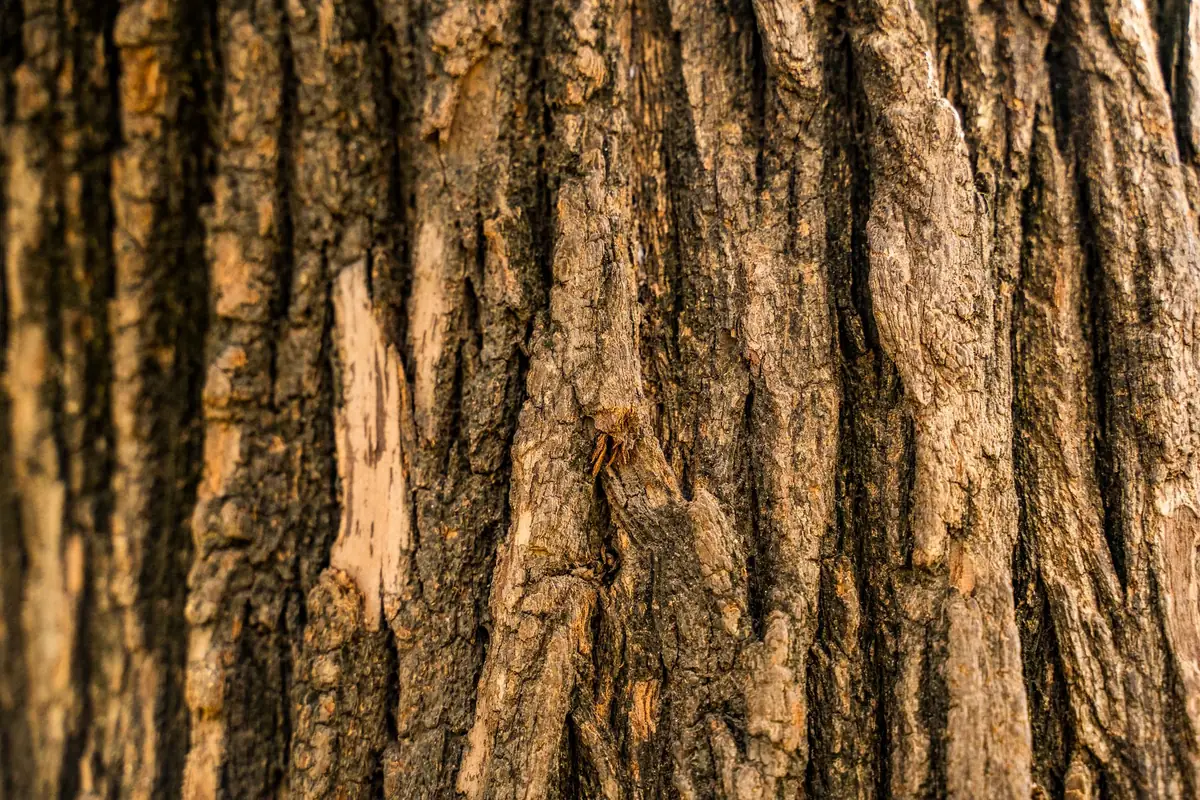
Then you look at the bark and it's cracked, maybe with dried gum around the split. Push at the loose edge and it lifts off. Underneath, instead of pale green wood, there's a layer of black powder that comes off on your hand like soot from a chimney.
That's sooty canker, and around here it's one of the most common things we get called out for on a mature shade tree.
What you're actually looking at
The fungus behind it is Neofusicoccum mangiferae, which older references still call Nattrassia mangiferae or Hendersonula toruloidea. The name has changed more than once, which is part of why searching for it online gets confusing fast.
The University of California's write-up on branch wilt describes the sequence plainly. Leaves suddenly wither, turn brown, dry up, and die, and the dead leaves typically remain attached to the twigs. Cracked bark can bleed profusely and contain viscous or dried gum. And removing affected bark often reveals black, powdery growth underneath.
That black layer is a mass of spores. It sits under the inner bark and, in UC's words, extends only shallowly into the wood, which matters more than it sounds. The tree isn't rotten through the middle. The damage is at the surface, in the layer that moves water.
UC lists citrus, mulberry and walnut among its hosts. In a valley where half the older yards in Palm Springs, Cathedral City and Indio have a mulberry over the patio and a citrus or two by the wall, that covers a lot of ground.
The detail that separates it from thirst
Dead leaves staying attached is the single most useful thing on this page.
A tree that's short of water sheds. It drops leaves to cut its losses, and you get bare twigs and a pile underneath. A branch killed by sooty canker keeps its leaves, because the branch died faster than the tree could drop them. Brown leaves still hanging in July is a plumbing failure in that branch, not a watering problem across the tree.
This is worth knowing before anyone turns the irrigation up. Watering harder doesn't reach a branch whose water supply has been cut, and in the meantime you've changed the whole tree's conditions for no reason.
Why the desert hands this fungus an open door
Here's the part that makes it our problem specifically.
UC calls the fungus a relatively weak pathogen. It doesn't force its way into healthy bark. It usually infects trees through wounds caused by freezing, fertilizer burn, sunburn, or mechanical injury, such as from pruning.
Read that list again with the Coachella Valley in mind. We have the sunburn. A trunk or a major limb facing southwest in La Quinta or Bermuda Dunes takes an amount of direct sun that trees from anywhere else never see, and bark cooks. Once bark is damaged, the door is open.
And we make it worse ourselves. Every time a canopy gets thinned hard, branches that spent years in shade are suddenly in full sun, and bark that was never adapted to it burns within a season. The heavy summer "clean up" that looks tidy in June is often what sets up the dead branch in August. That's the same pattern behind spraying for whitefly: the intervention causes the next problem.
Pruning cuts themselves are on UC's list too, and the spores are already in the neighborhood. UC notes they're produced in tree litter and on dead leaves, twigs and branches, and spread by splashing water and air movement. So a fresh cut in a yard where an infected branch is sitting in a pile by the gate is an invitation.
What tree disease treatment actually helps
UC's advice is short: protect trees from injuries, and properly prune off all diseased branches each year.
Cut back into clean wood, past where the discoloration stops. Take the material off the property rather than stacking it, for the same reason you would with any other pest you're pruning out. Sitting in a pile in the sun, it's a spore source aimed at whatever you cut next.
Time it away from the heat where you can. Fresh cuts in the middle of a Palm Desert summer are wounds opening in the exact conditions the fungus wants, and the new exposure sunburns bark that was shaded that morning.
Keep the water right. UC's own emphasis is on providing adequate soil moisture by irrigating appropriately through the growing season. Not more water. Appropriate water, which in a Rancho Mirage or Indian Wells landscape usually means fewer, longer, deeper cycles rather than a daily sip that never reaches the roots that matter.
And leave shade where the tree has it. Every branch you take off the south and west side is bark you've just exposed. That's the judgment call an arborist is making when they say no to taking more off, and it's usually the least popular thing we say.
What not to bother with
There's no spray that cures this. The fungus is under the bark, in tissue you can't reach from outside, and by the time you can see the black powder the branch is already gone. Anyone quoting you for a fungicide treatment on a branch with sooty canker is selling you something that can't work on the part that's infected.
Removing the affected branches and stopping the next wound is the whole treatment. It isn't glamorous and it doesn't come in a tank.
When to call about tree disease treatment in Palm Springs
Call if branches are dying one at a time with the leaves still attached, if you find black powder under lifted bark, or if a tree has lost several limbs over a couple of seasons and nobody has said why.
The reason to have an arborist look rather than a crew with a saw is that the diagnosis changes the job. If it's sooty canker, the answer is targeted removal and then protecting the bark you have left. If it's something else, taking branches off may be the worst available move. Telling those apart on the tree is the work.
We're on Highway 111 in La Quinta and we cover the valley from Palm Springs through Indio. If you've got a branch that died with its leaves on, that's worth a look before the next one goes. The Coachella Valley office can get a tree doctor out to you.